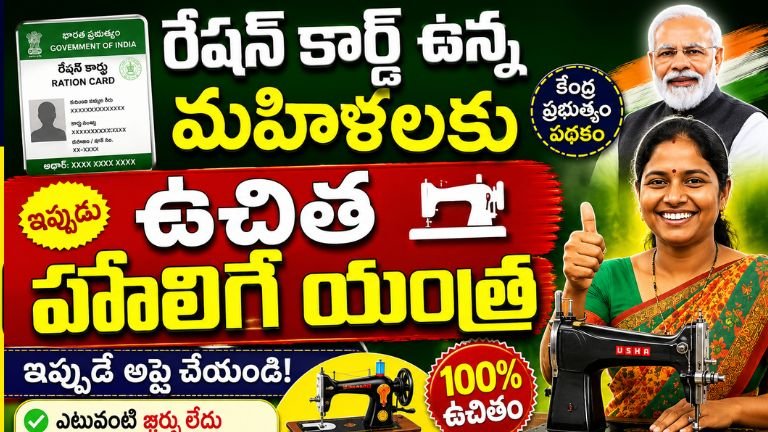
These messages create a false sense of urgency, making readers feel they must act immediately or lose a valuable benefit. However, like many viral posts, this statement mixes a small amount of truth with significant exaggeration.
The truth is that the Government of India, along with various state governments, runs highly structured welfare programs to help women, tailors, and traditional artisans secure modern sewing machines. The fiction, however, is the idea that the government is simply handing out free ₹20,000 machines to anyone who clicks an unverified link or fills out a basic form.
The most prominent initiative supporting this cause is the PM Vishwakarma Yojana, which provides a ₹15,000 toolkit incentive alongside structured training stipends. When added together, the total financial support does equal roughly ₹20,000, but it is distributed through official channels, not random internet links.
This comprehensive guide breaks down the facts, explains how the program works, details who qualifies, and outlines the correct way to apply safely.
Debunking the Myth: What is Fact vs. Fiction?
To avoid falling for online scams, it is important to analyze these viral claims objectively:
-
The Myth: The government is giving away high-end physical sewing machines worth ₹20,000 directly to every woman who submits a basic online form. No verification or background checks are required.
-
The Reality: The central government offers a structured ₹15,000 Toolkit Incentive via the PM Vishwakarma Yojana specifically for individuals registered under the Darzi (Tailor) trade. This benefit is tied to mandatory skill training, biometric verification, and institutional approval.
The rumor regarding the “₹20,000 price tag” comes from combining two distinct benefits within the scheme:
-
A ₹15,000 digital e-voucher or Direct Benefit Transfer (DBT) grant to buy the tailoring equipment.
-
A daily training stipend of ₹500 per day for the duration of the training program (ranging from 5 to 15 days, adding an extra ₹2,500 to ₹7,500).
While the total financial value invested in each approved applicant can easily cross ₹20,000, it is delivered as a structured economic support package, not as a direct product drop-off.
Core National Initiative: PM Vishwakarma Yojana
Managed by the Ministry of Micro, Small, and Medium Enterprises (MoMSME), the PM Vishwakarma Yojana is a flagship central sector scheme designed to uplift traditional artisans and craftspeople. The scheme officially recognizes 18 traditional trades, and the Darzi (Tailor) trade is one of its largest components, heavily utilized by women seeking financial self-reliance.
The program aims to ensure that beneficiaries do not just receive a tool, but also master the skills required to earn a sustainable living with it.
The Five Pillars of Support
The program provides an all-inclusive support ecosystem built around five key areas:
-
Official Recognition: Approved applicants receive a PM Vishwakarma Certificate and an official ID Card. This validates their skills and helps them secure commercial tailoring contracts or clothing manufacturing work.
-
Skill Upgradation: Applicants participate in structured training sessions. This includes a Basic Training phase (5 to 7 days) to refine foundational skills and an optional Advanced Training phase (15 days or more) focusing on modern design and garment production.
-
Toolkit Incentive: Upon completing the basic training, a ₹15,000 grant is issued as a digital e-voucher or Direct Benefit Transfer (DBT). This money is restricted for purchasing a professional-grade sewing machine and related tailoring tools.
-
Collateral-Free Credit Support: To help entrepreneurs grow their tailoring shops into larger boutiques, the scheme offers low-interest loans. The first phase provides up to ₹1,00,000 with an 18-month repayment window. After successful repayment, applicants can unlock a second phase loan of up to ₹2,00,000 with a 30-month repayment timeline. The interest rate is heavily subsidized at a flat 5%.
-
Digital Transaction Incentives: To promote digital literacy, the government pays an incentive of ₹1 per digital transaction (up to 100 transactions per month) directly into the artisan’s bank account for their commercial sales.
Detailed Financial Breakdown
The financial benefits provided to an individual approved under the tailor trade category are structured as follows:
| Benefit Component | Type of Financial Benefit | Value / Payout Details |
| Toolkit Incentive Voucher | Non-repayable Grant / e-Voucher | ₹15,000 (Strictly for purchasing a sewing machine) |
| Basic Training Stipend | Direct Benefit Transfer (DBT) | ₹500 per day (₹2,500 to ₹3,500 total for 5-7 days) |
| Advanced Training Stipend | Direct Benefit Transfer (DBT) | ₹500 per day (Up to ₹7,500 for extended training) |
| Digital Trade Rewards | Cashback Bonus | Up to ₹100 per month (Paid based on digital sales) |
| Phase 1 Enterprise Loan | Low-Interest Credit (5% interest) | Up to ₹1,00,000 (No collateral required) |
| Phase 2 Enterprise Loan | Low-Interest Credit (5% interest) | Up to ₹2,00,000 (For business scaling) |
This structural design explains why social media messages reference a ₹20,000 value. An applicant completing 10 days of total training receives ₹5,000 in stipends alongside the ₹15,000 toolkit voucher, bringing the total non-repayable assistance to exactly ₹20,000.
Eligibility Criteria: Who Can Safely Apply?
To ensure that government funds directly assist underprivileged tailors and home-based workers rather than commercial enterprises, strict eligibility filters are enforced.
An applicant must meet the following requirements to qualify for the scheme:
-
Active Profession: The applicant must be actively involved in tailoring (Darzi) or a related artisan craft within the unorganized sector on a self-employed basis.
-
Minimum Age: The applicant must be at least 18 years old on the date of registration.
-
One Benefit Per Household: The program enforces a strict “one beneficiary per family” rule. A family is defined as a unit consisting of a husband, wife, and their unmarried children. If multiple family members from the same household apply, only one application can be approved.
-
No Government Employees: If any member of the immediate family works in government service (Central, State, Public Sector Undertakings [PSUs], or local municipal bodies), the entire household is disqualified.
-
No Recent Duplicate Loans: The applicant must not have borrowed money from similar credit-linked government livelihood schemes (such as PMEGP, PM SVANidhi, or Mudra loans) within the past 5 years.
Required Documents Checklist
Before starting the application process, make sure you have clear, original copies of the following documents to prevent your application from being delayed or rejected:
-
Aadhaar Card: This is the primary document used for identity and age verification. Your Aadhaar card must be linked to an active mobile number to receive secure OTPs.
-
Ration Card or Family ID: This document is required to verify the structure of your household and ensure compliance with the “one benefit per family” policy.
-
Bank Account Passbook: A valid passbook or cancelled cheque is required. The bank account must be fully active, KYC-compliant, and Aadhaar-seeded to receive Direct Benefit Transfers (DBT) and digital vouchers smoothly.
-
Active Mobile Number: Essential for receiving registration confirmations, training schedules, and digital toolkit e-vouchers.
-
Caste/Community Certificate (If Applicable): While the program is open to all communities, specific reporting tracks monitor the benefits provided to SC, ST, OBC, and minority demographics.
Official Step-by-Step Application Process
You cannot register for this scheme entirely on your own from a home smartphone browser, because the portal requires biometric identity verification. You must visit an official registration center.
Follow these steps to submit a secure, official application:
[Prepare Documents & Active Mobile]
                │
                ▼
  [Visit Local CSC Office (Free)]
                │
                ▼
  [Aadhaar Biometric Verification]
                │
                ▼
 [Fill Form & Select Trade: "Darzi"]
                │
                ▼
 [3-Tier Official Review Pipeline]
 (Panchayat -> District -> Ministry)
                │
                ▼
 [Approval & Attendance of Training]
                │
                ▼
 [Receive ₹15,000 Toolkit Voucher]
Step 1: Visit a Common Service Center (CSC)
Collect your documents and go to your nearest Common Service Center (CSC) or Digital Seva Kendra. The operator will open the official portal at pmvishwakarma.gov.in.
Step 2: Complete Aadhaar Biometric KYC
The registration begins with two-factor authentication:
-
An OTP is sent to your Aadhaar-linked mobile number.
-
The applicant must place their finger on a biometric scanner connected to the terminal to verify their identity through the national database.
Step 3: Enter Professional Details
The operator will fill out your personal profile, address, and bank information.
-
Important Step: In the professional details section, ensure the operator selects Darzi (Tailor) from the trade dropdown menu. Selecting an incorrect trade will assign you to a different training track and disqualify you from receiving a sewing machine toolkit.
Step 4: Submit Household Information
Enter your Ration Card or Family ID number. The portal will automatically verify your family details against state welfare records to confirm that no other household member has already claimed the benefit.
Step 5: The Three-Tier Review Process
After submission, your application passes through three distinct verification levels:
-
Level 1 (Gram Panchayat or Local Urban Body): Local officials verify that you are a resident practicing the tailoring trade in their area.
-
Level 2 (District Committee): The District Screening Committee filters out duplicate entries and confirms compliance with regional rules.
-
Level 3 (Screening Committee Approval): The central Ministry gives final approval based on recommendations from local levels.
Step 6: Attend Skill Training
Once approved, you will be notified via SMS to attend Basic Skill Training at a local authorized center. You will receive a daily stipend of ₹500 directly in your bank account for each day of attendance.
Step 7: Redeem Your Toolkit Voucher
After completing the training and passing the basic assessment, a ₹15,000 digital e-Voucher is sent to your registered mobile phone via SMS or a secure QR code link. You can redeem this voucher at authorized partner stores to purchase your choice of a professional sewing machine and matching tailoring tools.
Understanding Sewing Machine Types for Your Business
When redeeming your ₹15,000 toolkit voucher, it helps to understand which type of sewing machine fits your commercial goals:
Manual Mechanical Machines
These traditional machines operate entirely via a foot treadle or a hand crank, requiring no electricity.
-
Advantages: Exceptional durability, minimal maintenance costs, and completely functional in rural areas with unreliable power grids.
-
Disadvantages: Lower operating speeds, requires continuous physical exertion, and limited to basic, straight-line stitching.
Motorized Electronic Machines
These modern units feature an integrated electric motor controlled by a foot pedal, and offer multiple built-in stitch patterns (such as zig-zag stitches, buttonholes, and overlocking finishes).
-
Advantages: High production speeds, minimal physical strain, and versatile enough to handle trendy clothing designs.
-
Disadvantages: Dependent on a steady electrical supply and requires careful handling of electrical components.
Computerized Industrial Units
High-end machines equipped with digital display screens, programmable stitching routines, automatic thread trimmers, and direct-drive heavy-duty motors.
-
Advantages: Incredible production speeds, flawless stitch precision, and capable of working continuously with heavy fabrics like denim, canvas, or leather.
-
Disadvantages: High purchase cost, requires specific technical training, and carries expensive repair costs.
A ₹15,000 voucher allows an applicant to comfortably buy a high-quality motorized electronic machine along with professional shears, measuring tapes, and initial thread inventories.
Apply Link
Identifying and Avoiding Online Welfare Scams
Because “Free Sewing Machine” announcements attract significant attention online, scammers frequently use them to steal money or personal details.
Protect yourself by keeping these safety guidelines in mind:
Red Flags of a Fraudulent Scheme
-
Fake Web Links: If a link shared on WhatsApp ends in
.xyz,.blogspot.com,.info,.online, or.site, it is a scam. Genuine central government websites always end in.gov.inor.nic.in. -
Demands for Upfront Fees: If an agent or website asks for an “application processing fee,” “courier charge,” or a “registration deposit” to secure your machine, close the page immediately. Registration on the official PM Vishwakarma portal through a CSC is completely free. The government never charges upfront fees to unlock welfare grants.
-
Requests for Sensitive Banking Data: Genuine portals will only ask for your Bank Account Number and IFSC code to send you DBT funds. They will never ask for your ATM card PIN, internet banking password, or your card’s 3-digit CVV number.
Action Plan for Digital Safety
-
Do Not Rely on Web Forwards: Type
pmvishwakarma.gov.indirectly into your web browser instead of clicking links forwarded in chat groups. -
Keep Your OTPs Private: Never share an SMS OTP with a stranger or an unknown caller claiming to be a “Government Verification Agent.”
-
Report Cyber Financial Crime: If you have accidentally sent money to a fraudulent portal, file an immediate report at the national portal:
cybercrime.gov.in.
Summary: Your Action Plan
If you want to secure your legitimate government tailoring toolkit and avoid missing out, use this quick checklist:
-
[ ] Verify Your Family Status: Ensure no one else on your current ration card has claimed a toolkit benefit in the past 5 years.
-
[ ] Check Your Aadhaar Link: Make sure your Aadhaar card is linked to your current, active mobile phone number.
-
[ ] Organize Your Documents: Place your Aadhaar card, Ration Card, and Bank Passbook in one folder.
-
[ ] Avoid Unverified Web Links: Do not enter personal details into unofficial websites or viral forms.
-
[ ] Visit a Local CSC: Go to your nearest authorized Common Service Center and request enrollment in the PM Vishwakarma Yojana under the Darzi (Tailor) trade.
-
[ ] Attend Training & Claim Your Voucher: Complete the mandatory basic training, collect your daily stipend, and use your ₹15,000 voucher to purchase a high-quality sewing machine.