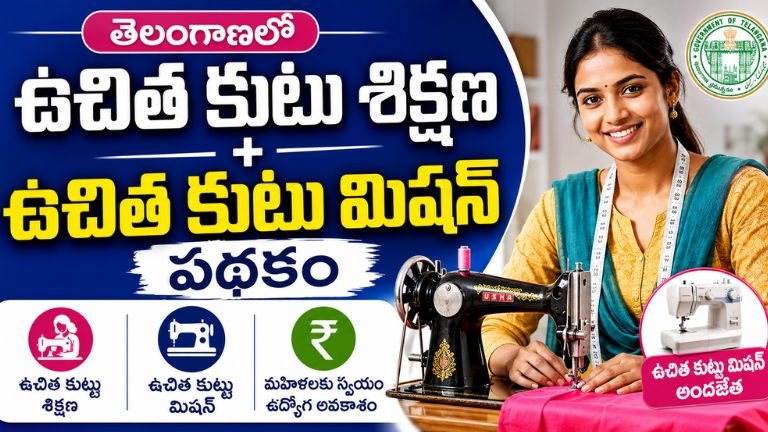
Empowering Women: Free Tailoring Training and Sewing Machine Schemes in Telangana
Economic independence is a transformative step for women, particularly in rural and semi-urban communities. Recognizing this, the Government of Telangana, alongside several prominent non-governmental organizations (NGOs) and skill development bodies, has rolled out targeted vocational programs. Among these, free tailoring training and subsidized equipment distribution schemes stand out as vital pathways to self-employment and entrepreneurship.
This post highlights the latest state initiatives, eligibility criteria, and alternative avenues available for women seeking to build a sustainable career in apparel manufacturing and fashion design.
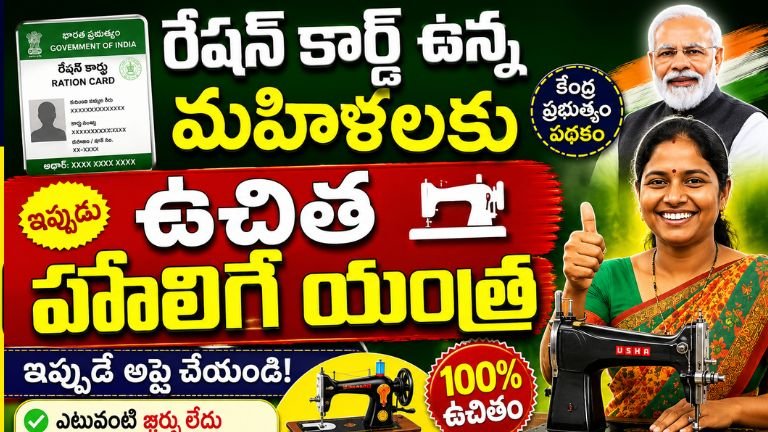
State Initiatives: The BC Women Automatic Sewing Machine Scheme
The Government of Telangana has recently intensified its focus on promoting self-employment among weaker sections. A primary driver of this economic push is the initiative overseen by the Telangana Backward Classes (BC) Cooperative Finance Corporation.
Under the direction of the state leadership, the government has authorized the distribution of automatic sewing machines to skilled women across the state.
-
High-Impact Allocation: The scheme targets the distribution of sewing machines to 1,000 skilled women per Assembly constituency across Telangana.
-
100% Financial Subsidy: Eligible beneficiaries receive the automatic machines entirely free of cost, removing financial barriers to entry.
-
Transparent Selection: To ensure the benefits reach grassroots levels without institutional friction, the selection of candidates is managed directly under the supervision of respective District Collectors.
Core Structure of Free Tailoring Training Programs
While receiving equipment is crucial, mastering the craft is the prerequisite. State-backed vocational institutes, such as the Apparel Training and Design Centre (ATDC) and various certified regional trusts, offer comprehensive training structures designed to align with industrial standards.
A typical government-recognized structural framework for these training modules includes:
Technical Curriculum
-
Fabric Drafting and Cutting: Understanding precise body measurements, utilizing size charts, and identifying fabric defects before cutting.
-
The Stitching Process: Mastery over basic, advanced, and industrial sewing machines, alongside essential embroidery and garment decoration techniques.
-
Inspections and Alterations: Learning how to evaluate garment fittings, perform precise alterations, and maintain quality control.
-
Workplace Management: Best practices for maintaining tailoring tools, optimizing safety protocols, and conducting minor machine repairs.
Operational Particulars
-
Attendance Mandate: Most government-sponsored courses require a minimum of 80% biometric or fingerprint attendance to qualify for certification and final examinations.
-
Financial Incentives: Certain centrally or state-sponsored daily wage/skill programs offer a small daily stipend (e.g., Rs. 50 per day) to help candidates cover basic local commuting costs.
-
Dual Certification: Successful candidates frequently earn certifications recognized by both the state and central skill councils, opening avenues for placement in major retail and garment manufacturing brands.
Alternative Training Hubs and NGO Alliances
In addition to direct government departments, several structured entities bridging public-private gaps offer reliable, free vocational training in Telangana:
-
Apparel Training and Design Centre (ATDC): Operating under state skill missions, ATDC regularly hosts sponsored training programs for underprivileged youth, minorities, and economically weaker sections (EWS), backed by robust digital placement portals.
-
NTR Memorial Trust: Based out of Hyderabad, this vocational training wing conducts dedicated skill development blocks in fashion designing and tailoring, explicitly focusing on rural women seeking long-term livelihood security.
-
Corporate Social Responsibility (CSR) Programs: Initiatives like those driven by the United Way of Hyderabad actively sponsor localized rural camps (such as recent projects in the Mahabubnagar district) that pair technical garment construction training with immediate sewing machine distribution upon graduation.
Eligibility Criteria and Documentation
To access either government-sponsored training slots or direct equipment distribution, applicants generally must satisfy the following benchmarks:
-
Residency: Must be a permanent resident of Telangana.
-
Category Specifications: For specific corporation schemes, applicants must belong to designated categories such as Backward Classes (BC), Scheduled Castes (SC), Scheduled Tribes (ST), or Minorities / EWS.
-
Age Bracket: Typically restricted to adult women, generally between 18 and 45 years of age.
-
Prerequisite Documentation: Applicants should keep their Aadhaar card, valid income certificate (verifying economically weaker status), community/caste certificate, and passport-sized photographs updated for submission through the official Meeseva or departmental portals.
Official Portals and Step-by-Step Application Guide for Free Tailoring and Sewing Machine Schemes
Accessing state and central assistance for tailoring programs involves utilizing targeted online portals. Because different wings of the administration manage specialized parts of these schemes—ranging from immediate equipment asset allocation to long-term industrial garment certifications—applicants must route their documents through the correct official digital gateways.
1. Primary Application Gateways
State Asset Subsidies: Telangana Corporate Support Portal
For direct hardware support, including the 100% subsidized automatic sewing machine scheme aimed at 1,000 skilled women per assembly constituency, applications are processed via the state’s Online Beneficiary Management and Monitoring System.
-
Official Gateway Portal:
-
Administrative Oversight: Telangana Backward Classes (BC) Cooperative Finance Corporation alongside the Center for Good Governance (CGG).
National Skill Upgradation: PM Vishwakarma Scheme
For comprehensive 5-to-15-day tailoring training modules that include a Rs. 500 daily training stipend and a subsequent Rs. 15,000 digital toolkit incentive grant for modern sewing tools, applications are handled centrally.
-
Official Gateway Portal: PM Vishwakarma Official Portal
-
Administrative Oversight: National Skill Development Corporation (NSDC) and Ministry of Micro, Small and Medium Enterprises (MSME).
Industrial Certification: Ministry of Textiles Samarth Scheme
For placement-linked, demand-driven garment manufacturing and advanced pattern-making certifications inside verified regional training centers in Telangana, registration runs through the national textile skill portal.
-
Official Gateway Portal:
-
Administrative Oversight: Ministry of Textiles, Government of India.
Step-by-Step Digital Registration Procedure
To ensure application forms pass preliminary automated validation checks without rejection, candidates must execute the following chronological steps:
Mandatory Offline Validation Protocol
Even when digital submission via the portals is successful, the formal allocation of seats and machinery requires physical validation to maintain institutional transparency.
Verification Warning: All digital applications are routed directly to the office of the respective District Collector. Applicants must present their physical original documents for physical verification at the local District BC Welfare Office or designated Meeseva verification desks when notified via SMS, or the application status will automatically expire.
-
apply now
By prioritizing high-subsidy asset distribution alongside structured technical education, Telangana’s vocational roadmap is successfully transitioning women from domestic stitchers to independent boutique owners and industrial operators. For aspiring entrepreneurs, tracking notifications issued by local District Collector offices or visiting the nearest Telangana Backward Classes Cooperative Finance Corporation office remains the most secure path toward securing enrollment.