Fact-Check: Can Women Get a Free Scooty If Their Husband Is Over 18? Understanding the BPL Ration Card Welfare Schemes
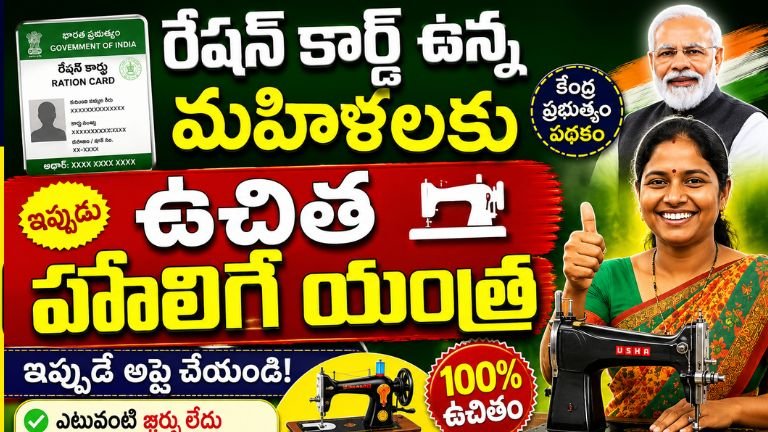
If you have been scrolling through your WhatsApp groups, Facebook feed, or YouTube recommendations lately, you might have come across a highly eye-catching headline in Telugu:
“ఈ మహిళకు ఉచితంగా స్కూటీ లభించింది. మీ భర్తకు 18 ఏళ్లు నిండి ఉంటే, ఇప్పుడే దరఖాస్తు చేసుకోండి. దరఖాస్తు చేసుకోవడానికి మీకు తప్పనిసరిగా బీపీఎల్ రేషన్ కార్డు ఉండాలి.”
(Translation: This woman received a free scooty. If your husband is above 18 years old, apply right now. You must have a BPL Ration Card to apply.)
It sounds like a dream come true, doesn’t it? A free two-wheeler to help women commute to work, drop kids off at school, and gain independence—all based on a standard BPL (Below Poverty Line) ration card and a husband over the age of 18.
But as the old saying goes: If it sounds too good to be true, it probably is.
In this deep-dive blog post, we are going to deconstruct this viral claim, separate myth from reality, look at actual government welfare schemes that offer two-wheelers, and provide you with a step-by-step guide on how to avoid falling victim to online scams.
Deconstructing the Viral Claim: What’s Catchy vs. What’s Fake
Let’s look closely at the phrasing of the viral message. It targets married women with two main eligibility criteria:
-
Your husband must be 18+ years old.
-
You must possess a BPL Ration Card.
The Logic Flaw: The 18+ Husband Rule
In India, the legal marriageable age for men is 21 years (under standard Indian law, though discussions to amend marriage ages have been ongoing). Therefore, saying a married woman can apply if her husband is 18+ years old is legally contradictory and highly suspicious. Furthermore, government schemes focused on women’s empowerment usually base eligibility on the woman’s age (typically between 18 and 40 or 45), her driving license status, and her annual household income—not just her husband’s age.
The BPL Card Trap
While it is true that many government welfare schemes require a Below Poverty Line (BPL) or Antyodaya Anna Yojana (AAY) ration card, scammers frequently use the term “BPL Card” as bait. Because millions of households hold these cards, using it as a criterion makes the scam feel highly relatable and inclusive to the masses.
The Reality: Do “Free Scooty” Schemes Actually Exist?
Yes, but with massive caveats.
Various state governments in India have launched two-wheeler subsidy schemes for women over the years. However, none of them are completely “free” without terms and conditions, and none of them operate under the criteria mentioned in the viral Telugu post.
Let’s look at the actual, legitimate government schemes that have existed or currently exist across different Indian states:
1. Amma Two Wheeler Scheme (Tamil Nadu)
Launched by the Government of Tamil Nadu, this was one of the most famous two-wheeler schemes in the country.
-
The Reality: It was never 100% free. The government provided a 50% subsidy or up to ₹25,000 (whichever was less) for working women to buy a motorized two-wheeler.
-
Eligibility: The woman had to be employed, aged 18 to 40, and the annual family income had to be below ₹2.5 Lakhs. A valid driving license was mandatory.
2. Scooty Subsidy Scheme for Meritorious Girls (Rajasthan & Other States)
States like Rajasthan (under the Medhavi Chhatra Scooty Yojana) and Jammu & Kashmir have offered free scooties to young women.
-
The Reality: These are merit-based educational incentives, not general public welfare schemes.
-
Eligibility: They are given strictly to female students who score exceptionally high marks in their 12th board exams or university degrees to encourage higher education. A husband’s age has absolutely zero relevance here.
3. Honda/Hero Corporate CSR Programs
Occasionally, private automobile manufacturers partner with non-governmental organizations (NGOs) to donate a limited number of two-wheelers to women entrepreneurs in rural areas.
-
The Reality: These are highly localized, micro-targeted CSR (Corporate Social Responsibility) initiatives, not a massive government portal where anyone can apply.
How “Free Scheme” Scams Work: The Dark Side of Viral Clickbait
Why do people create these fake posts and YouTube videos? It usually boils down to two things: Ad revenue (Clickbait) and Cyber Fraud (Data Theft/Financial Scams).
| Phase of the Scam | What Happens Behind the Scenes |
| Step 1: The Bait | A catchy thumbnail or message is shared on WhatsApp/YouTube showing a woman receiving a vehicle from a politician. |
| Step 2: The Urgency | “Apply right now!” creates a sense of FOMO (Fear Of Missing Out), making people act before thinking critically. |
| Step 3: The Phishing Link | You are asked to click a link (usually an unverified .blogspot, .xyz, or .in domain rather than a .gov.in website). |
| Step 4: Data/Money Extraction | The site asks for your Aadhaar card, Ration card details, phone number, and sometimes an “application processing fee” of ₹99 to ₹499. |
Once you pay that fee or submit your data, the scammers disappear. Your identity data is sold on the dark web, and your hard-earned money is gone forever.
Genuine Central & State Government Portals to Trust
If you want to check if a welfare scheme is real, you should look only at official government channels. Bookmark these trusted directories:
-
National Government Services Portal: services.india.gov.in
-
MyScheme Portal (The ultimate marketplace for government schemes): myscheme.gov.in
-
State Government Portals: Always ensure the web address ends with
.gov.in(e.g.,ap.gov.infor Andhra Pradesh ortelangana.gov.infor Telangana).
⚠️ Red Flag Alert: If a website URL ends in
.com,.net,.org, or looks like[http://government-free-scooty-yojana.com](http://government-free-scooty-yojana.com), close the tab immediately. Official government websites will always use the secure.gov.inor.nic.indomains.
How to Verify Fake News on WhatsApp and Social Media
Before you forward a message to your family groups, take 60 seconds to perform these simple checks:
-
Check for a “Forwarded Many Times” Tag: If a message has this tag on WhatsApp, treat it with caution.
-
Search the Headline: Copy the exact text and search it on Google followed by the word “Fact Check”.
-
Look for Mainstream Media Reports: If a government was giving away free vehicles to millions of BPL families, it would be front-page news on major news channels and newspapers. The absence of official news reports is a clear indicator of a hoax.
-
No Direct Contact Details: Fake notifications rarely provide an official office address, helpdesk email, or toll-free number belonging to a government department.
apply link
Protect Yourself and Your Family
To wrap things up: The viral Telugu post claiming that a woman can get a free scooty simply because she has a BPL card and an 18+ husband is entirely fake. It is a classic piece of internet misinformation designed to steal your personal data or generate ad income for fraudulent websites.
Empowerment comes through education and awareness. If you know someone who is getting excited about this message and preparing to send their sensitive documents to an unknown link, share this article with them right now and protect them from cyber fraud.
Stay safe, stay informed!
Have you seen similar messages circulating in your local community groups? Let us know your thoughts in the comments below!